
Redesign and migration
Make the website match the business it has become.
Strategic redesign for established businesses that need clearer journeys, stronger presentation and a controlled route to launch.
- Keep what still works
- Protect useful content
- Improve priority journeys
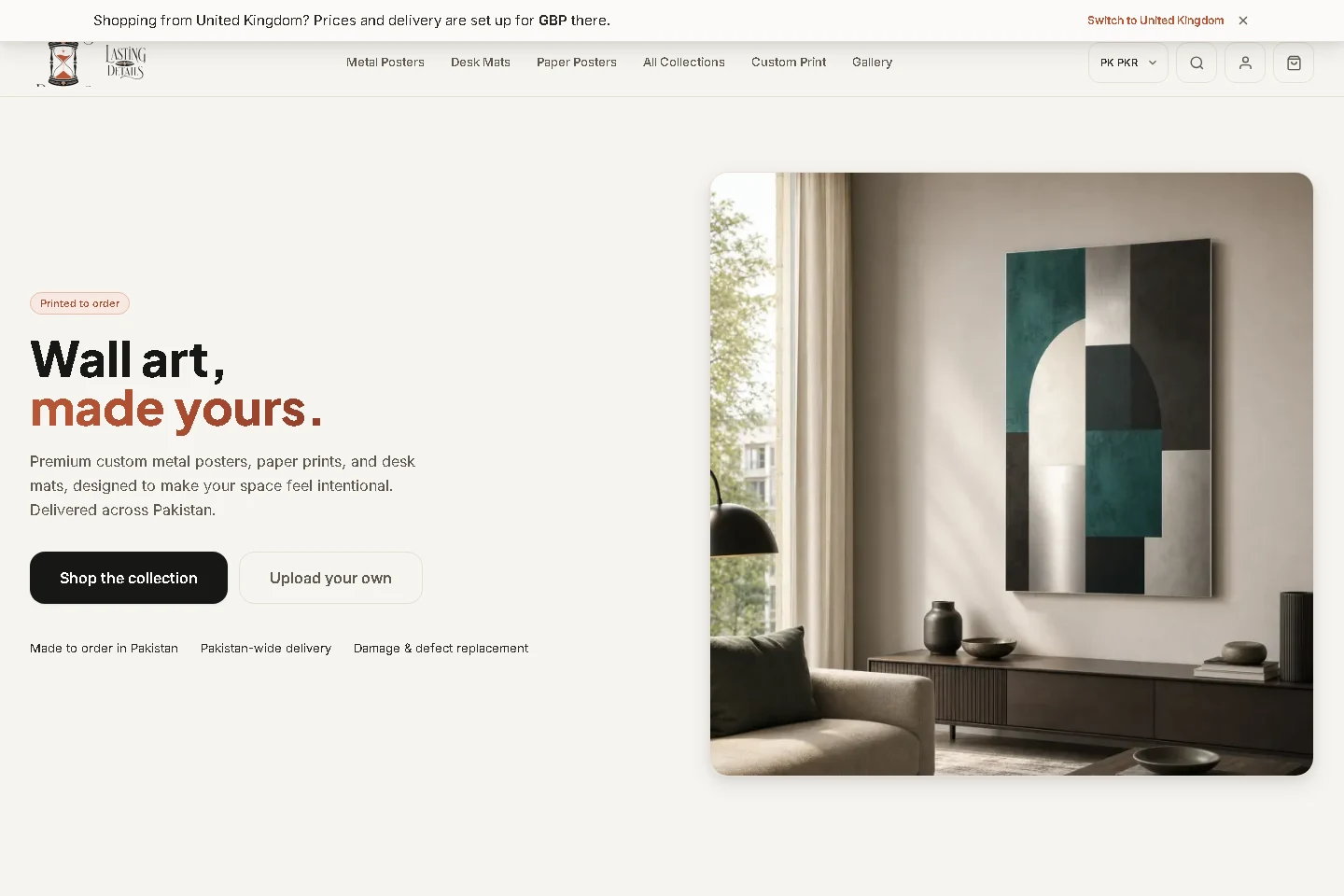
Project you can inspectLasting Details
Website strategy, design and development for a custom-product customer journey.
Read the documented case studyWhen redesign becomes necessary
The business has moved forward. The website has not.
A redesign should resolve concrete customer and operational problems—not simply replace one visual style with another.
- The website undersells the quality of the business
- Navigation has grown without a clear structure
- Mobile or performance friction interrupts key journeys
- A platform change must preserve useful content and search value
A focused redesign scope
Decide first. Design and migrate second.
The final scope follows discovery, existing systems and content readiness. The sequence remains deliberate.
- 01
Audit and direction
Review the current structure, content, priority journeys, technical constraints and evidence worth keeping.
- 02
Structure and interface
Rebuild the information architecture and responsive experience around the actions customers need to take.
- 03
Migration and launch
Move approved content, map redirects, test critical behavior and release through a controlled staging process.
Migration decisions
Not everything should move unchanged.
Each important page, asset and journey needs an explicit destination before launch.
- Keep
Useful content, URLs and functionality that already support customers.
- Improve
Pages and journeys with value but weak structure, presentation or usability.
- Redirect
Retired or consolidated URLs that still have visitors, links or search value.
A controlled route to launch
Clear stages reduce expensive surprises later.
The exact depth changes by project, but the decision sequence stays deliberate.
Protect useful content and search equity
Redesign high-priority journeys first
Build and migrate in a controlled environment
Test redirects, forms, tracking and launch behaviour
Redesign questions
What should be clear before work begins.
A useful discovery process resolves risk and scope before visual work creates momentum in the wrong direction.
Will a redesign damage existing search visibility?
It can if valuable URLs, content and internal links are changed without a plan. The redesign process should inventory useful pages, map redirects and verify the final site before launch. No responsible provider should promise unchanged rankings.
Can existing content and functionality be reused?
Yes, where they still serve the customer and business. Discovery identifies what should be kept, improved, combined or removed so useful assets are not discarded automatically.
Does a redesign require a new CMS or platform?
Not always. A platform change should be justified by editing needs, integrations, performance, maintainability or commercial requirements—not treated as a default part of redesign.
Will the current website need to go offline?
Most work can be prepared and tested in a controlled environment before launch. The exact release plan depends on the current hosting, platform, domain and integration setup.
Plan the next version
Start with what is not working—and what must not be lost.
Share the current website, the priority customer action and the constraints around content, search or platform migration.
Discuss a redesign Request a website reviewUsually within one business day