E-commerce development
Make product discovery and buying one clear journey.
E-commerce strategy, design and development for product businesses that need dependable browsing, personalisation, checkout and store operations.
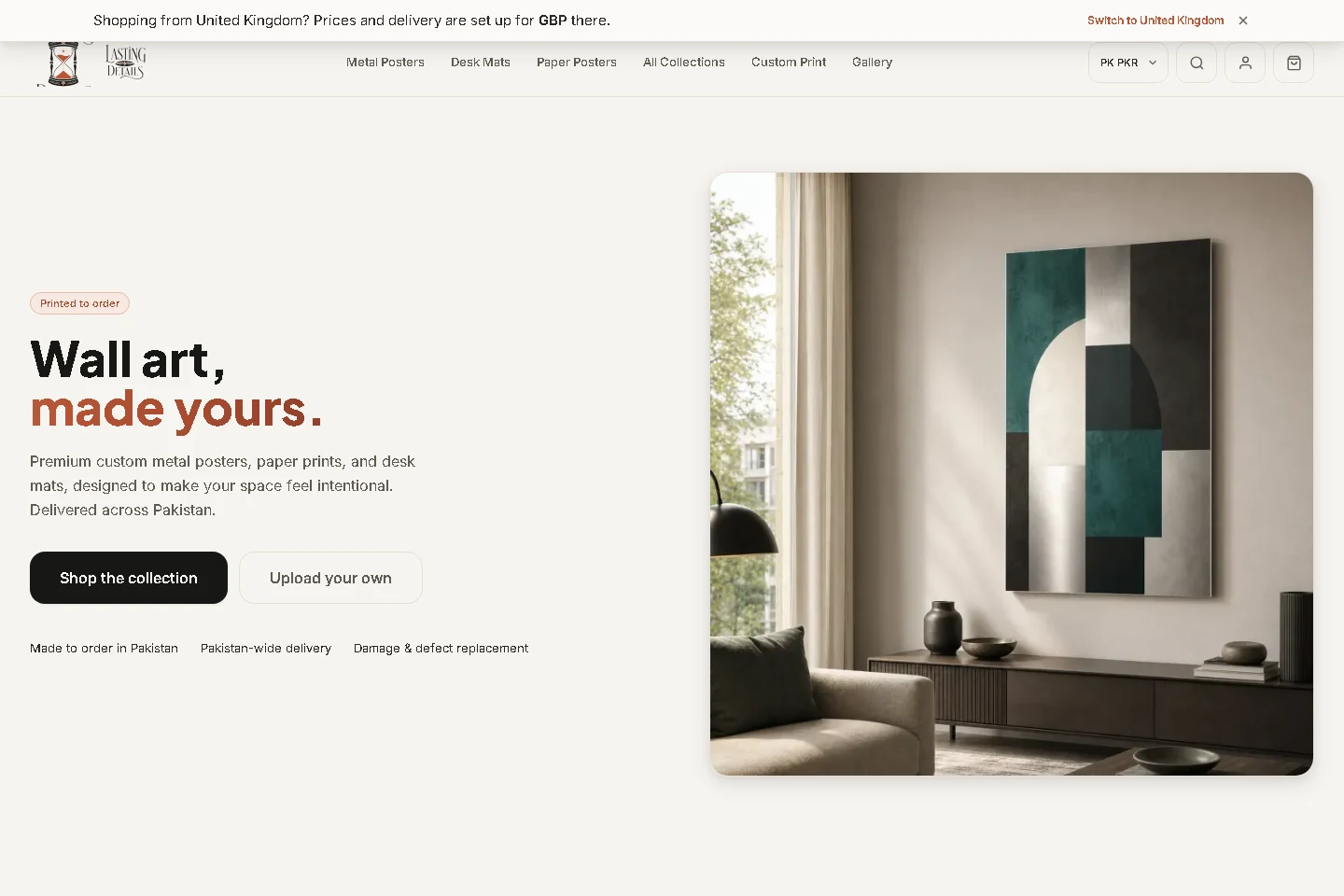
Ready-made products and customer-supplied artwork brought into one coherent shopping experience.
Inspect the evidenceBest fit: Retailers and custom-product brands whose catalogue, order rules or customer decisions need more than a generic storefront.
When this work matters
Make the buying model work before choosing the storefront.
- 01
Categories do not match how customers browse
- 02
Options and personalisation create uncertainty
- 03
Checkout or delivery rules interrupt the sale
- 04
Store management depends on fragile manual work
Focused scope
Product discovery, operations and checkout—designed together.
Discovery confirms what belongs in the project and what should remain outside it.
Responsive storefront design
Product options and personalisation
Payments, delivery and order rules
Customer emails and account journeys
Merchant analytics and store handover
Decisions before delivery
Resolve catalogue and fulfilment complexity early.
Good implementation follows clear business, content and ownership decisions.
Structure before styling
Organise products, categories and filters around customer decisions and operational reality.
Explain complex choices
Use progressive guidance for variations, artwork, delivery and custom requirements.
Protect daily operations
Treat fulfilment, content editing and order management as part of the customer experience.
Planning your project
Bring real products and orders to the first conversation.
A useful brief explains how customers buy and how your team fulfils an order. Examples reveal requirements that a feature list can miss.
How to brief an e-commerce development projectShare representative products, including variants, personalisation and any artwork approval steps.
Describe payment methods, delivery regions, stock ownership and the process for cancellations or returns.
List existing catalogue data and any systems that must receive orders or inventory updates.
What affects scope, cost and timing?
Catalogue size, custom product options, data migration and integrations affect cost and delivery time. We confirm these dependencies before proposing a scope; an existing store also needs a plan for redirects and launch continuity.
Delivery sequence
Build the store around real operations.
The depth changes with the project; the order protects the important decisions.
- 01
Catalogue and operations discovery
- 02
Product journey architecture
- 03
Storefront and checkout design
- 04
Commerce build and integrations
- 05
Order testing, training and launch
Before we begin
What to settle before store development.
Specific answers follow discovery, but these principles guide the recommendation.
Do you work with custom or personalised products?
Yes. The product journey can account for artwork uploads, variations, custom details and assisted ordering where required.
Which platform fits our store?
We assess your catalogue, customisation, integrations, ownership and recurring costs before recommending a platform. Our featured custom storefront projects use Next.js and Medusa; WooCommerce integration is demonstrated by Artxpress ERP.
Can you migrate an existing store?
Yes. Product, customer, order and search requirements are assessed before a migration plan is approved.
Will checkout and order emails be tested?
Yes. Payment, delivery, taxes, notification and representative order scenarios are included in pre-launch testing.
Let's make it work
Your next chapter starts with a conversation.
Tell us what your business needs. We will review the requirements and help you define a practical next step.
Discuss your project [email protected]Usually within one business day